

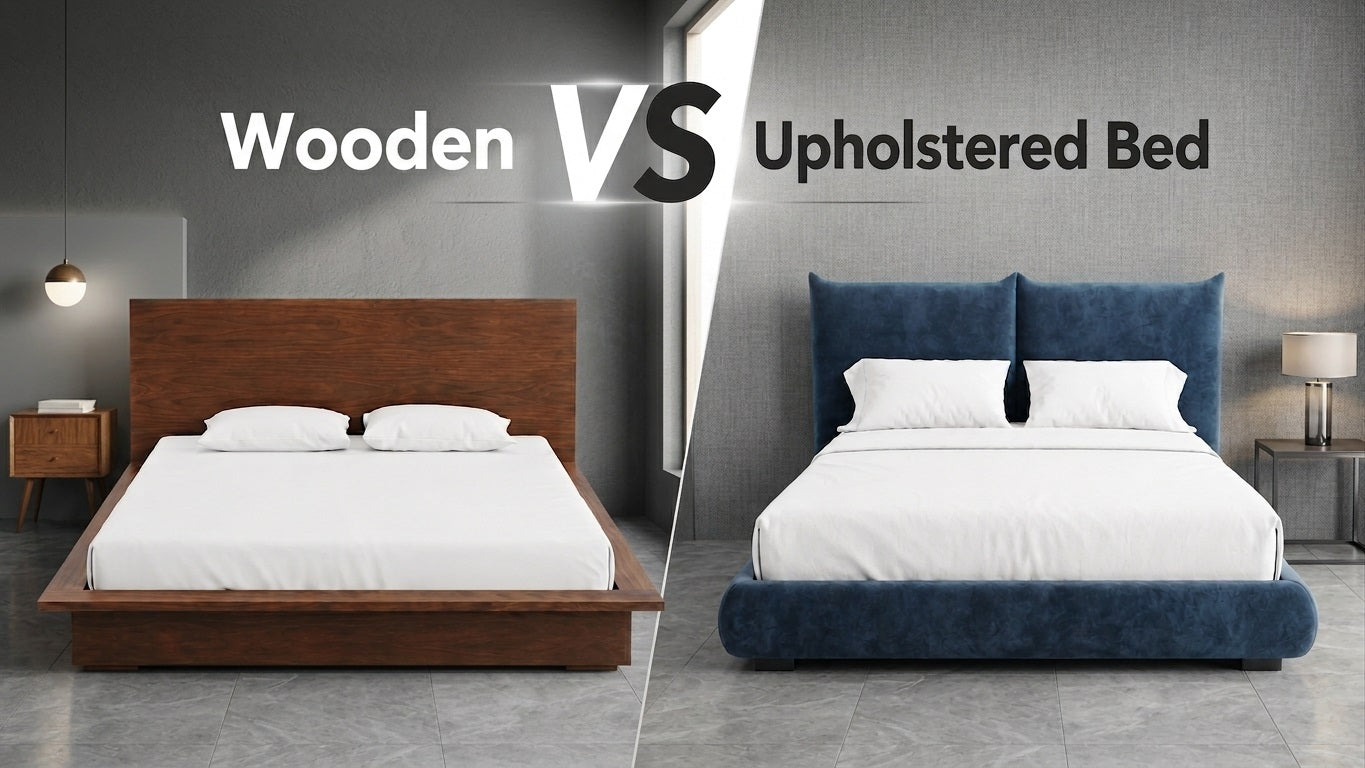
Wooden vs Upholstered Bed Designs: Which One Should You Choose?
Love the softness of a padded headboard but worried about cleaning it? Or do you prefer the simple appeal of wood? Choosing between a wooden bed design and an upholstered bed usually comes down to room style, cleaning habits, climate, and how you use the bed each day. For many Pakistani homes, wood is practical if you want easy dusting, a firm structure, and a timeless look, but make sure to choose the best wood for beds. Upholstery suits people who often sit up in bed, prefer a cushioned headboard, or want a softer visual style. Neither is automatically better. The right choice depends on your household and bedroom. Wood vs Upholstery at a Glance Feature Wood Upholstery Appearance Natural and structured Soft and decorative Cleaning Usually easy to dust and wipe Needs vacuuming and spot care Headboard feel Firm Padded Style options Classic to contemporary Wide choice of colors and textures Best for Lower-maintenance rooms Reading and relaxing in bed If simple upkeep is your priority, wood often has the advantage. If you value a padded headboard and textile detail, upholstery may suit you better. Why Choose a Wooden Bed? Wood gives a bedroom clear visual structure and can work with traditional Pakistani interiors, minimal apartments, or contemporary spaces. Easier Everyday Cleaning Hard surfaces are straightforward to dust with a soft cloth, which helps where outdoor dust enters through windows or balconies. Wood also avoids the regular vacuuming that textile-covered headboards may need. Follow the manufacturer's care instructions, especially for polished, painted, or veneered surfaces. Flexible Styling Wood pairs naturally with cotton bedding, neutral rugs, colorful cushions, and Pakistani textiles. You can refresh sheets, wall colors, or accessories without replacing the frame. Many modern bed designs use clean panels and simple lines instead of heavy ornamentation, making wood suitable for compact and spacious bedrooms. A Firmer Headboard The trade-off is softness. If you read, watch TV, or use a laptop in bed, a hard headboard may require extra pillows behind your back. Why Choose an Upholstered Frame? This type of bed has padding and textile covering around part of the frame, usually the headboard. It creates a softer surface and can make a bedroom feel more relaxed. Better for Sitting Up A cushioned headboard feels gentler behind your shoulders and back. This is useful if you regularly read before sleeping or spend time sitting upright. A fabric bed can also soften a room dominated by straight lines, wooden cabinets, or tiled flooring. More Color and Texture Choices Upholstery can include neutral weaves, channel stitching, button details, or smooth padded panels that connect visually with curtains, rugs, or an accent chair. Beige, taupe, gray, and off-white create a calm base. Darker shades add contrast, but check how clearly lint, dust, or marks show on the chosen material. More Routine Care Textile surfaces collect dust differently from wood. Vacuuming the headboard with a suitable attachment can help, especially in bedrooms exposed to outdoor dust. Before buying, ask what cleaning method is recommended, whether the textile can be spot cleaned, and which products should be avoided. Which Type Works Better in Pakistan's Climate? Pakistan has varied climates. Heat, monsoon humidity in some regions, dry weather in others, dust, and sunlight can all affect bedroom furniture. For warm rooms, focus on breathable bedding and avoid choosing heavy padding only for appearance. If you prefer upholstery, consider texture and cleaning requirements as carefully as color. Wood may be simpler for quick dust removal. However, any furniture design can be affected by moisture, direct sunlight, poor ventilation, or incorrect cleaning. Keep the frame away from damp walls where possible and follow care guidance. Also Read: Which Mattress Should You Buy For Your Bed? How to Choose the Right Bed for Your Lifestyle Use these five checks when comparing bed designs: Think about headboard use. If you sit upright for long periods, padding may be useful. If the headboard is mostly decorative, wood may be enough. Be realistic about cleaning. Choose a hard surface for less textile maintenance. Choose upholstery if regular vacuuming already fits your routine. Measure the room. How to measure room for furniture? Thick padding and oversized headboards can reduce usable space. Record the total width, length, and headboard depth before ordering. Check existing furniture. Compare the frame with wardrobes, side tables, flooring, curtains, and wall colors. Review construction and care details. Ask about frame support, joints, finishes, upholstery care, and recommended use before buying. Which Style Works Better With Your Interior? Choose wood if your room already includes timber tones, rattan, classic furniture, or decorative textiles. It also works well when bedding and wall décor provide most of the color. Choose upholstery if you want the headboard to act as a soft focal point. A simple fabric bed can pair well with plain walls, understated side tables, and layered lighting. People exploring modern bed designs can also consider mixed materials. A frame with wooden elements and a padded headboard combines a structured look with a softer surface. When comparing options from a furniture brand such as Diamond Home, look beyond the product photo. Check dimensions, materials, headboard depth, care instructions, and how the piece will fit your actual layout. Wood or Upholstery: Choose What Fits Your Bedroom Choose wood if you value simple upkeep, a firm structure, and flexibility across décor styles. Choose upholstery if padding, texture, and a softer headboard are higher priorities. Before buying, measure the room, consider local dust and humidity, review care instructions, and think about how often you sit against the headboard. These checks will help you choose a bed that looks right in your home and remains easy to live with. FAQs 1. Is wood better than upholstery for a bed? Wood is often better if you prioritize easy cleaning, a structured appearance, and less textile maintenance. Upholstery is usually better if you want a cushioned headboard and a softer bedroom look. 2. Are fabric-covered beds difficult to maintain in Pakistan? Not necessarily, but they usually need more routine cleaning than hard surfaces. Regular vacuuming, quick attention to spills, good ventilation, and correct cleaning products can make care easier. 3. Which option is better for a small bedroom? A slim wooden frame or a lightly padded design with a narrow headboard can both work well. Check the full dimensions rather than assuming one material is always better for a compact room. 4. What fabric should I consider for an upholstered headboard? Choose a durable upholstery textile with care instructions you can realistically follow. Consider texture, stain visibility, breathability, and how easily the surface can be vacuumed or spot cleaned. 5. Should all bedroom furniture match the bed? No. A coordinated bed set creates a consistent look, but mixed finishes can work when pieces share similar colors, proportions, or design lines. In smaller rooms, well-sized furniture is often more useful than matching every item.